Hip pain in Boulder, CO shows up in the moments you least expect it: a deep pinch in the groin coming out of a squat at the gym, an ache on the outside of the hip that flares the second you lie down, a catch halfway through a trail run up Chautauqua. It rarely announces itself all at once. It just quietly narrows what you’re willing to do.
Before long you’re modifying hikes, skipping the stairs at work, and warming up longer than you used to before a run on the Boulder Creek Path. At MŪV Chiropractic, we treat the hip as the center of a busy intersection, not a single sore joint working in isolation. It’s a deep ball-and-socket built to carry your whole body’s load, and when it hurts, there’s almost always more than one thing feeding it.
What’s actually happening in the joint
The hip is a ball-and-socket joint, stable by design but demanding to maintain. The femoral head sits deep inside the pelvis, wrapped in cartilage, a fibrous labrum, a joint capsule, and layers of muscle that coordinate on every step. When any one part of that system gets irritated, stiff, or weak, the whole joint changes how it moves. A tight hip flexor pulls the pelvis out of position. A weak glute medius lets the pelvis drop with every step, grinding at the joint surfaces. A stiff low back changes how load travels down into the hip in the first place. None of these pieces work alone, which is exactly why hip pain rarely has one clean cause.
What hip pain actually feels like
Hip pain doesn’t look the same for everyone, but a few patterns show up again and again in Boulder patients:
- A deep pinch in the groin. Often worse when you bend the hip past ninety degrees, sit low in a chair, or come out of a deep squat.
- An ache on the outside of the hip. Frequently worse at night, especially lying on that side, and can point toward bursitis or glute tendon irritation.
- Clicking or catching. A mechanical sensation on certain rotations that can suggest labral irritation.
- Stiffness that’s worst first thing in the morning. Loosens somewhat with movement but never fully clears, which often points toward early degenerative changes.
- A deep ache that travels down the back of the leg. Sometimes coming from the hip itself, sometimes referred from a nearby nerve.
- A sense of instability or “giving way.” Especially on uneven trail terrain or single-leg movements like getting out of a car.
What’s actually causing it
A good share of what people describe as hip pain is not purely a hip problem at all. The hip sits directly between the lumbar spine above and the knee below, and it absorbs whatever those neighbors send its way. An irritated low back or a stiff SI joint can refer pain straight into the hip and glute, mimicking a joint problem that isn’t really there — which is one reason low back pain and hip pain so often travel together. On the other end, a knee that’s tracking poorly or an ankle that doesn’t move well changes how force lands in the hip with every step, and that’s part of why hip and knee pain so often show up in the same runner or hiker. Piriformis irritation deep in the glute can also mimic true sciatic pain, which is part of why we’re careful to sort out hip-driven symptoms from true sciatica before deciding on a plan. Add in the common local drivers — long trail miles on uneven terrain, ski days that ask a lot of the hips and glutes, hours at a desk that leave the hip flexors short and tight, or simply years of wear on the joint surfaces — and it’s clear why the hip rarely acts alone.
Why it keeps coming back
Rest and pain relievers can quiet a flare-up, but they don’t change the mechanics that caused it. If your glute medius is weak, your pelvis will keep dropping on every stride the moment you go back to running, no matter how much ibuprofen you’ve taken. If your low back is stiff, it will keep shifting extra load into the hip joint every time you sit, bend, or lift — which is part of why we often look at options like spinal decompression alongside direct hip care when the low back is clearly part of the picture. Pain relief without addressing what’s actually driving the pattern tends to buy you a few good weeks before the same ache resurfaces, often at a less convenient time. That’s why we start most hip plans with chiropractic care aimed at the whole chain — low back, pelvis, hip, knee, and foot — rather than treating the sore spot in isolation.
How We Treat Hip Pain
Here’s what we often reach for with hip pain:
-
Chiropractic adjustments. Hands-on work that restores motion through the low back, pelvis, and hip so the joint stops taking uneven load
-
Soft-tissue work. Release for the tight glutes, hip flexors, and rotators that pull the joint out of its easiest path
-
Corrective exercise & postural work. Progressive strength and movement work that keeps the improvement once the pain settles
What to expect at your first visit
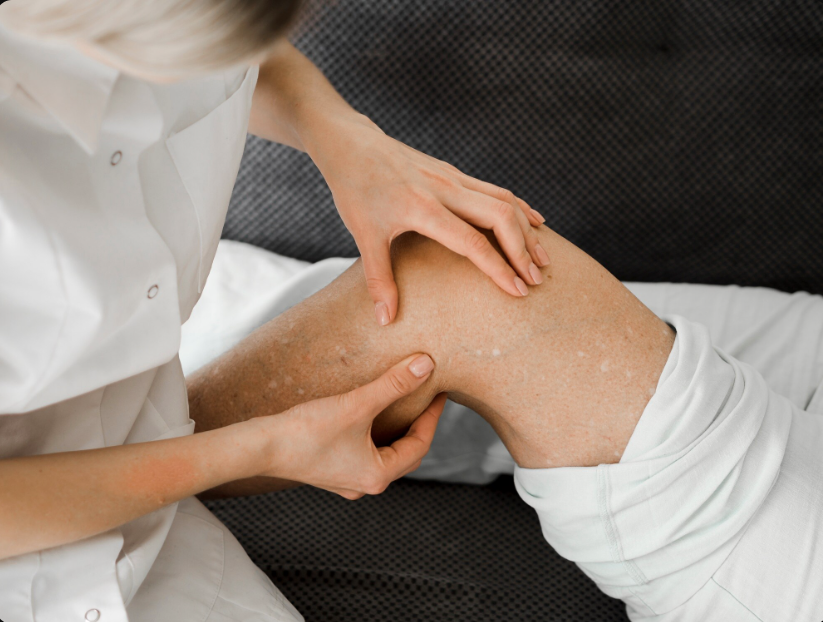
We open your first visit by talking through your hip — how the pain began, what makes it better or worse, and what you’re hoping to get back to, whether that’s a trail run, a ski season, or simply sleeping through the night without the ache waking you. From there we do a hands-on exam of the hip, low back, and the joints around them, using imaging when it helps us see the joint clearly rather than as a routine step for every patient. We build a plan around your hip and everything feeding into it, and adjust that plan as you progress. Many people notice a shift within the first few weeks, though timelines vary depending on how long the pattern has been building. If you’re new to MŪV, our what-to-expect guide walks through the whole visit, and the $99 New Patient Special is a low-pressure way to get that first exam without a big commitment up front.
What you can do at home
A few general habits tend to help hip pain settle rather than escalate, alongside whatever plan your provider builds with you:
- Keep moving, gently. Complete rest often stiffens the hip further. Short, easy walks tend to serve you better than sitting still.
- Build load back gradually. If a hike or run flared things up, ease back in over a few sessions rather than jumping straight back to your old mileage.
- Mind your sleep position. A pillow between the knees when side-sleeping can take pressure off an irritated hip.
- Stay hydrated. Well-hydrated tissue tends to tolerate load better than dehydrated tissue, especially at Boulder’s elevation.
- Check your desk setup. A chair that’s too low or too soft can shorten the hip flexors over the course of a long workday.
Frequently Asked Questions about Hip Pain in Boulder
Often, yes. Many cases of hip pain involve the low back, SI joint, or pelvis as much as the hip itself, and hands-on care aimed at that whole chain can ease symptoms that a hip-only approach might miss. It depends on the specific cause, which is exactly what your first visit is designed to sort out.
It varies. Many people notice a shift within the first few weeks of care, but hips that have been bothering you for months or years, or that involve real structural changes, typically take longer and more patience. We’ll give you an honest sense of timeline once we’ve had a chance to examine you.
No. We start with a hands-on exam and a real conversation about your history, and we’ll recommend imaging if and when it would actually change your plan. Plenty of hips respond well to care without ever needing a scan.
Sometimes, in a modified way, and sometimes it’s worth backing off for a bit. That call depends on what’s driving your specific pain, which is something we can help you sort out rather than guess at on your own.
No referral is needed. You can book directly with us, and if we find something that would benefit from a specialist’s opinion, we’ll point you in the right direction.
New patients can start with our $99 New Patient Special, which covers a real exam and a chance to talk through what’s going on before you commit to anything further.
If hip pain has been shrinking your trail runs, your ski days, or just your ability to get comfortable at night, we’d like to help you get to the bottom of it. You can book an appointment whenever you’re ready, or start with the $99 New Patient Special if you’d rather ease in with a low-pressure first visit.

 See all on Google