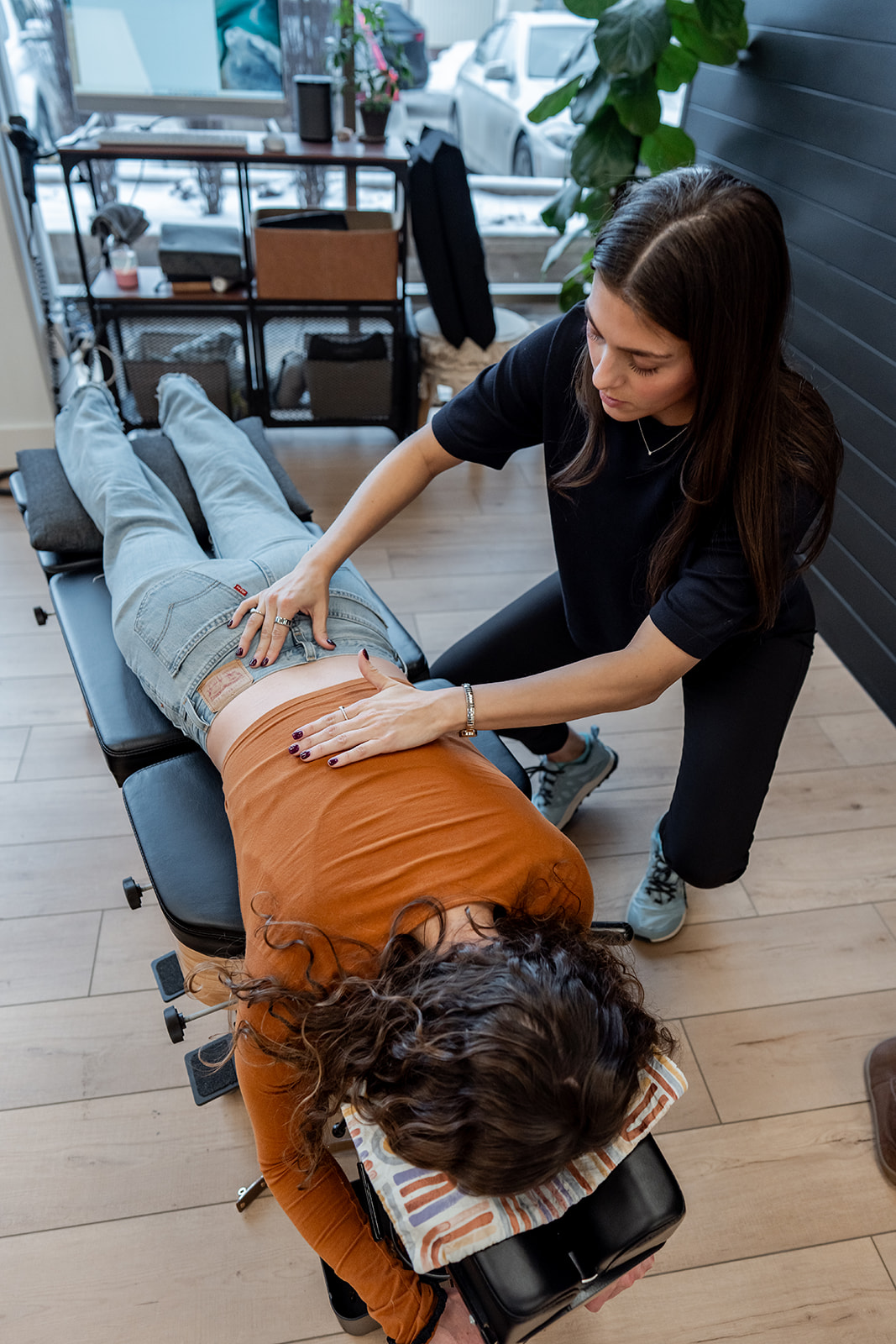
Neck pain in Boulder tends to sneak up on people. It’s rarely one dramatic moment — more often it’s checking a blind spot on the Diagonal, glancing down at your phone in line at a coffee shop on Pearl Street, or turning your head to talk to someone in the passenger seat and feeling that unmistakable catch. Then one morning you wake up and your neck simply will not turn the way it used to, and a bad day starts feeling like your new normal.
At MŪV Chiropractic we look at the neck as part of the whole spine and posture system, not an isolated stiff joint. That’s often exactly why neck pain lingers longer than people expect it to — the neck is doing more work than it was built to do, and until that changes, the ache keeps finding its way back.
What’s actually going on in your neck
Your cervical spine is made up of seven small vertebrae that support the weight of your head — about ten to twelve pounds — while still letting you look up, down, and side to side dozens of times an hour. Between each vertebra sit discs that cushion movement, and small facet joints that guide rotation and bending. Muscles layer over all of it, meant to assist movement, not do the heavy lifting.
When posture shifts forward, which happens constantly with screens and phones, the muscles at the base of your skull and across your upper back start working overtime to keep your head from tipping forward. Facet joints can get irritated or restricted. None of this shows up as a single injury. It shows up as tightness that doesn’t fully release, and a range of motion that quietly narrows over months or years.
What neck pain actually feels like
Neck pain doesn’t look the same for everyone, but a few patterns show up again and again in people we see from Boulder and the surrounding towns.
- Stiffness that limits rotation. Turning to check a blind spot or look over your shoulder feels tight, restricted, or outright painful.
- A dull ache that builds through the day. Mornings feel okay, but by mid-afternoon at a desk the ache is back and harder to ignore.
- Tension that climbs into the head. A tight band across the base of the skull that turns into a headache by evening.
- Tightness between the shoulder blades. The neck rarely acts alone — the upper back often feels just as locked up.
- Trouble finding a comfortable sleeping position. Pillows that used to work suddenly don’t, and you wake up worse than you fell asleep.
- Occasional tingling into the shoulder or arm. Less common, but worth mentioning to whoever you see, since it can point to nerve irritation.
What’s actually causing it
Around Boulder, between long desk days and active weekends, most of the neck pain we treat traces back to a handful of familiar patterns, often stacked on top of each other.
Tech and desk posture. Hours spent looking down at a laptop, monitor, or phone gradually pulls the head forward of the shoulders. Every inch that head drifts forward multiplies the load on the muscles and joints trying to hold it up — this is the same mechanical pattern behind what people often call text neck or tech neck.
Old injuries that never fully settled. A past whiplash, fender bender, ski fall, or sports collision can leave joints slightly guarded long after the initial soreness fades, even though the tissue itself has healed.
Arthritis and general wear. Over years, the joints of the cervical spine can develop stiffness and mild inflammation, particularly if posture and movement habits haven’t kept pace.
Muscle tension from stress, poor sleep, or repetitive movement. Tight, overworked muscles at the base of the skull and across the shoulders are a common thread, whether from a demanding week or a rough stretch of sleep.
It’s worth saying plainly: the joint itself is rarely the whole story. Neck pain is almost always a chain reaction that starts somewhere else — the mid-back, the shoulders, the way someone sits, stands, or holds a phone — and shows up at the neck because that’s the most mobile, most exposed link in the chain.
Why rest or a bottle of ibuprofen alone doesn’t fix it
Rest can quiet symptoms for a day. Painkillers can dull the ache long enough to get through a workday. Neither one changes the underlying mechanics that created the problem in the first place. If your head still drifts forward at your desk, if your upper back is still rounded and your shoulders still rolled in, the same joints and muscles will keep getting asked to do the same overtime work — and the pain tends to return.
This is also why a single massage or a hot shower often helps for an afternoon and then the ache creeps back the next day. Temporary relief isn’t the same as addressing the pattern. Cervicogenic headaches — headaches that originate from tension and joint restriction in the neck rather than the head itself — are a good example. Treat only the head, and the headache returns. Treat the neck and the posture behind it, and the headaches often ease along with the neck pain.
Settle down what’s happening in the neck and the upper back together, with attention to the posture patterns feeding both, and the pain tends to loosen its grip in a way that a quick fix rarely manages.
How We Treat Neck Pain
Here’s what we often reach for with neck pain:
-
Cervical adjustments. Precise, gentle adjustments that restore motion to the joints of the neck
-
Soft-tissue work. Hands-on release for the muscles that tighten around restricted joints
-
Corrective exercise. Posture and strength work that keeps your neck comfortable through long desk days
-
Spinal molding. A simple at-home molding tool that supports the neck’s natural curve between visits
What to expect at your first visit
We begin at MŪV by sitting down with you and mapping out your neck pain — how it began, what makes it better or worse, and what a normal day looks like for you, whether that’s mostly desk time, driving, or weekends on a bike or the slopes. From there we do a hands-on exam of your neck, upper back, and posture, checking range of motion and looking for the patterns driving the pain, with imaging brought in when it actually helps clarify what’s going on.
We build a plan around your neck and the upper back and shoulders supporting it, not just the sore spot, and adjust that plan as you progress. If you’re not sure what to expect walking in the door, our first visit guide walks through it step by step. New patients can also take advantage of our $99 New Patient Special, so getting started doesn’t have to be a big decision on its own.
What you can do at home
None of this replaces a real exam, but a few habits tend to help most people with everyday neck stiffness and tension.
- Raise your screen. Bringing a laptop or monitor closer to eye level reduces the amount of time your head spends drifting forward.
- Take movement breaks. Standing up and gently rolling your shoulders every 30 to 45 minutes keeps the muscles around your neck from locking into one position for hours.
- Hold your phone up, not down. Lifting your phone toward eye level instead of tilting your head down adds up over dozens of daily checks.
- Stay hydrated. Discs and soft tissue rely on hydration to stay pliable, and dehydration can make everyday stiffness feel worse than it needs to.
- Load activity back in gradually. Whether it’s a return to trail running, cycling the Boulder Creek Path, or a day on skis, easing back in rather than jumping to full intensity gives your neck a chance to keep up.
Frequently Asked Questions about Neck Pain in Boulder
Chiropractic care aims at the mechanics behind the pain, not just the symptom. Adjustments and soft-tissue work can ease joint restriction and muscle tension, and a broader plan that includes posture and movement work is meant to address the pattern feeding the pain, not just cover it up.
It varies by person and by how long the pattern has been building, but many people notice a shift within the first few weeks of consistent care. Longstanding or arthritic cases sometimes take longer, and we’ll be upfront with you about a realistic timeline once we’ve done an exam.
No referral is required to schedule a visit with us. If we find something during your exam that’s outside our scope, or that needs additional imaging or a specialist’s opinion, we’ll tell you directly and help point you in the right direction.
For most people, yes. We start every new patient with a conversation and a thorough exam specifically so any adjustments are appropriate for your neck and your history. If you ever have numbness, tingling, or weakness running down your arms, or any loss of coordination, tell us right away — those are worth ruling out carefully before any hands-on care.
Often, yes. Headaches that start at the base of the skull and radiate up and forward are frequently tied to tension and joint restriction in the upper neck, sometimes called cervicogenic headaches. If you deal with both neck pain and headaches, addressing the neck often helps both together — see our page on headaches and migraines for more on how the two connect.
New patients can start with our $99 New Patient Special, which covers a consultation and exam. From there, we’ll walk you through a plan and what it involves before you commit to anything further.
If your neck has been quietly running your day for long enough, it’s worth a real conversation about what’s driving it. Book an appointment with MŪV Chiropractic, or start with the $99 New Patient Special and let’s take a proper look at what’s going on.
Learn more about chiropractic care →

 See all on Google